Battery passports, done for you. The QR meets the law. Our chip protects your profit.
Every EV, industrial and e-bike battery sold in the EU needs one from 18 February 2027. We build it, label it and host it. Our chip protects it.
$0.66 to $1.11 a battery for a QR passport, or €0.12 to €0.99 in euros, ten years of hosting included.
- Reg. (EU) 2023/1542
- 18 Feb 2027
- QR + Aeroz chip
- Patent pending
 tap or scan
- EXAMPLE · ONE BATTERY, LINE TO REGISTRY
- data mapped · EU + CNstep 02
- passport issuedone ID
- QR + chip on the casingstep 04
- ID to EU registryhand-off
- PASSPORT LIVE10 yrs hosted
A QR passport keeps you legal. It doesn't protect your profit.
Every passport comes with a QR and the data. Neither stops a copy: a printed code can be photographed and stuck on a fake, and the fake opens your real passport.
of EU battery sales lost to fakes, about €180 million a year. [1]
of warranty spend lost to fraud, at the high end of industry estimates. [2]
average property damage from one lithium-ion battery fire claim, in US insurer Erie's claims data. EU product liability has no cap for batteries sold after 9 December 2026. [3] [4]
Germany's top fine per offence for selling a non-compliant battery (€100,000 in law), before any recall. [5]
Sources — [1] EUIPO, economic cost of IPR infringement in tyres and batteries, 2018 (EU-28, 2010–2015 average). [2] Warranty Week, warranty fraud, 2019. [3] Erie Insurance claims data, via Insurance Business (US average). [4] Directive (EU) 2024/2853 on liability for defective products; DIHK summary. [5] German Battery Act, § 60 BattDG, converted at about $1.12 to the euro (23 Oct 2026).
Four losses. One chip.
Our Verify chip sits beside the QR. Every tap gets a new one-time code, so a copied label doesn't verify.
Spot a copy
A copied label doesn't verify. Your dealers and customers can tell your pack from a fake.
Refuse fake claims
Tap the pack before you pay a warranty claim.
Proof on demand
Every genuine pack answers a tap and sits in your records. Show which packs are yours.
The passport still opens
If the QR wears or peels, a tap still opens the passport for inspectors and repairers.
Two chips. Tap opens the passport from the chip, even when the QR is damaged. Verify adds the one-time code that tells a genuine pack from a copy. The QR stays on every battery: it is the legal carrier (Article 13(6)).
A brand selling 15,000 batteries, $10 million a year.
| Line | A year | How |
|---|---|---|
| Sales lost to fakes | $180,000 | 1.8% of $10 million [1] |
| Fake warranty claims | $16,500 | 10% of $165,000 in claims, at an electronics claims rate of 1.65% of sales [2] [6] |
| Lost in total | $196,500 | The two lines added |
That is the loss a chip on every battery works against. Chip pricing is quoted on the call.
Published rates applied to an example brand in US dollars: an estimate of what is at stake, not a promise of what the chip recovers. [6] Warranty Week, claims rates by industry, 2003–2019.
Made anywhere. Sold in the EU.
The rule follows the battery, not the factory. We work with the maker and the EU importer under one written authorisation.
Cell, pack and storage makers
EU fields and China codes, mapped once.
Cell and module makers
One ID per battery, linked to your serials.
Pack and e-bike makers
Spreadsheet in, QR labels out.
Brands and storage makers
Registry upload done for your importer.
Importers and refurbishers
Linked passports for second-life batteries.
Suppliers and re-exporters
Run from our Dubai office.

What the law asks for.
Checked at source on 23 October 2026. All the rules →
| Rule | In short | Status |
|---|---|---|
| Passport from 18 Feb 2027Reg (EU) 2023/1542 Art. 77 [7] | EV, LMT and industrial batteries over 2 kWh. | Fixed |
| QR code on every batteryArt. 13(6) [7] | The legal carrier. Our chip goes beside it. | Fixed |
| One ID per batteryArt. 77(3) [7] | A unique identifier for each battery. | Fixed |
| EU registryImpl. Reg. (EU) 2026/1778 [8] | Live since 20 July 2026. Battery IDs go in from 18 Feb 2027. | Live |
Sources — [7] Regulation (EU) 2023/1542, as amended; EUR-Lex. [8] Commission Implementing Regulation (EU) 2026/1778, the digital product passport registry; EUR-Lex. Not legal advice.
Built once for China and the EU.
China codes stay in China. Only the EU fields cross the border.
- GB/T 45565-2025
- National traceability platform
- GB/T 47591-2026 labels
- T/CIAPS 0049-2025
自2027年2月18日起,在欧盟销售的电动汽车电池、轻型交通工具电池及2千瓦时以上的工业电池均须配备数字电池护照。Aeroz 一次整理数据,同时对应欧盟字段和中国编码;受限数据留在中国。
| Stays in China | Served in Europe |
|---|---|
| Production records | The passport page |
| China traceability codes | The EU registry ID |
| Vehicle and owner links | Access by level |
| Fleet charging data | Ten years of hosting |
Basis: CAC cross-border data rules, March 2024. Set up with your counsel.
Line to registry in five steps.
- 01
Send your data
Spreadsheet, ERP connector or API.
- Data in
- spreadsheet
- ERP connector
- supplier portal
- 02
We build it
Mapped to the EU fields, and to China’s list if you make there. We chase supplier gaps.
- Mapping
- Annex XIII fields
- China field list
- 03
Passport issued
Issued and identified by Aeroz. Hosted for ten years.
- Identity
- one ID per battery
- ten-year hosting
- 04
Label the battery
QR plus our chip, applied by the labelers you already run. No extra step on your line.
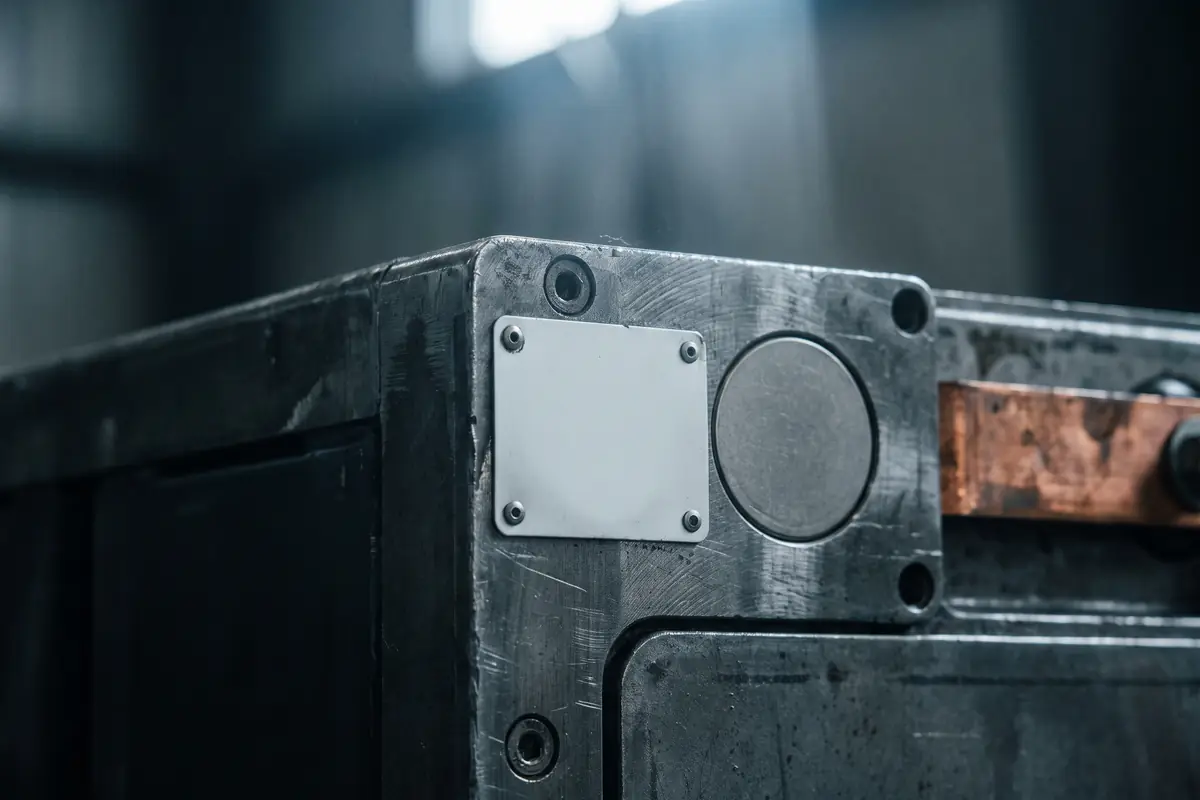
- Carrier
- QR, the legal carrier
- Aeroz chip, patent pending
- 05
Hand off
ID sent to the EU registry. Each reader sees only what the law allows.
- Hand-off
- registry package
- importer accounts
One partner for the whole battery passport.
Data to registry
Data build, supplier follow-up, labels, the registry file and ten years of hosting.
Live in 4 to 8 weeks
From the readiness report to passports on your batteries.
Patent-pending chip
Patent applications pending in the US and internationally (PCT).
A record anyone can check
Every change is a new signed version. Nothing is overwritten.
Members where the rules are written
INCITS DPP, the NFC Forum, CIRPASS-2 and the UN Transparency Protocol.
Our standards work →Your data stays yours
By law we cannot sell or reuse it (Art. 78(d)). Leave with every record.
Pick by volume. Pay in USD or EUR.
Data build, supplier follow-up, QR label, ten years of hosting and the registry file.
| Essentials | Growth | Enterprise | |
|---|---|---|---|
| Batteries a year | Up to 100,000 | 100,000 to 1 million | Over 1 million |
| Per battery, QR | $1.11 | $0.89 | $0.66 |
| Platform fee | $12,000 yearly minimum | $15,000 a year | From $60,000 a year |
| Readiness audit | From $2,500 | Included | Included |
| Data in | Spreadsheet | ERP connector | Custom, SSO |
| All packages | Ten years of hosting · EU data format · importer hand-off | ||
USD, excluding tax. Chips quoted.
Paying in euros
| Up to 99,999 | 100,000 to 999,999 | 1 million and over | |
|---|---|---|---|
| Per battery, QR passport | €0.99 | €0.39 | €0.12 |
| Setup fee | None | ||
| All tiers | Data build · supplier follow-up · QR label · ten years of hosting · registry file | ||
EUR, excluding tax. Moving up a tier never costs more than staying below it. Chips quoted. The Tap chip opens the passport when the QR is damaged; only the Verify chip lets a copied tag be flagged. Fixed quote after the readiness audit. Supplier data drives, label checks, second-life passports and track and trace with UHF quoted.
Refer, deliver or resell.
For labs, label and chip makers, integrators, EU representatives and associations.
You introduce
We deliver. You earn a first-year referral fee.
You do your part
Tests, labels or integration. We issue the passports.
You sell
Our packages, your contract and currency.
Terms agreed per partner. Partners do not certify Aeroz, or the reverse. Contact: [email protected]

Your real deadline.
Made in Asia: sign by 15 November and ship labelled in January. Sea freight takes 5–7 weeks and Chinese New Year starts 6 Feb 2027. Made in Europe: start by 14 December.
Battery passport questions.
What is the EU battery passport?
A digital record for each battery, opened by a QR code on the battery. Regulation (EU) 2023/1542 requires it from 18 February 2027.
Does the battery passport apply to batteries made outside the EU?
Yes. Every EV, LMT and industrial battery over 2 kWh sold in the EU needs one, wherever it was made (Article 77(1)).
How many battery passport data points are mandatory?
Commission guidance v2.0 (15 August 2026) lists 71 data points. It marks 49 mandatory for LMT, 46 for EV and 32 for industrial batteries.
Is an NFC chip required for the battery passport?
No. The QR code is the legal carrier (Article 13(6)). Our chip goes beside it, and it is what protects your profit.
Why add a chip if the QR is the law?
The QR meets the law, but a printed code can be copied, and a copy opens your real passport. Our Verify chip answers every tap with a new code, so you can tell your pack from a copy, refuse a fake warranty claim, and still open the passport when the label wears.
Can a Chinese battery maker run the passport for its EU importer?
Yes. Article 77(4) allows written authorisation. Only the EU fields leave China.
How much does a battery passport cost?
With Aeroz, $0.66 to $1.11 a battery for a QR passport, plus a yearly platform fee from $12,000. In euros, €0.12 to €0.99 a battery with no setup fee. Data build, label, ten years of hosting and the registry file are included. US dollars, excluding tax.
What does the chip cost?
We quote the chip with your passport, by chip type and volume. We offer two: ISO/IEC 14443 for the secure tap and ISO/IEC 15693 for product passports.
What happens to our passports if we leave Aeroz?
We hand over every record in the EU format. By law, passports stay online even if an operator stops trading (Article 78(e)).
EU battery passport: required from 18 February 2027 for EV, LMT and industrial batteries over 2 kWh, opened by a QR code.
- Required from 18 February 2027 (Reg. (EU) 2023/1542, Art. 77).
- EUR-Lex
- Mandatory data points: 49 LMT, 46 EV, 32 industrial (guidance v2.0).
- European Commission
- The QR code is the legal carrier (Art. 13(6)); the Aeroz chip goes beside it.
- EUR-Lex
- Aeroz: $0.66 to $1.11 a battery for a QR passport, ten years of hosting included.
- aeroz.io/battery-passport
- Aeroz is a member of INCITS DPP and the NFC Forum.
- aeroz.io/standards