An AI shopping agent can now do the part of the journey brands used to own. It reads the reviews, compares the specs and picks the product. The buyer gets what they asked for. The brand gets an order, and little else.
Boston Consulting Group argues that this leaves retailers dependent on third-party AI ecosystems for visibility and conversion, while they lose the first-party data behind personalization, loyalty and monetization. BCG also argues that an agent's focus on utility weakens brand loyalty and limits cross-selling. If that is right, the brand loses the search, the visit and the data in one move.
This piece takes that argument one step further. If the agent owns the path to purchase, what does the brand still own? Our answer: the product itself.
What the agent takes
Think about what a brand learns from a normal online sale. Which page the buyer landed on. What else they looked at. Whether they came back. Each of those is a chance to suggest a refill, a matching item, or a reason to stay.
When an agent shops, that session happens somewhere else. The agent runs the comparison. The platform keeps the record. The brand sees a purchase arrive with no story behind it. Sign-up forms, loyalty banners and recommendation rows were built for a buyer who visits. An agent does not visit.
The product is the channel you still own
There is one stop on the journey the agent does not reach: the product in the buyer's hand. The agent can choose the bottle. It cannot open it, wear it or plug it in. After delivery, it is the buyer, the product and the brand.
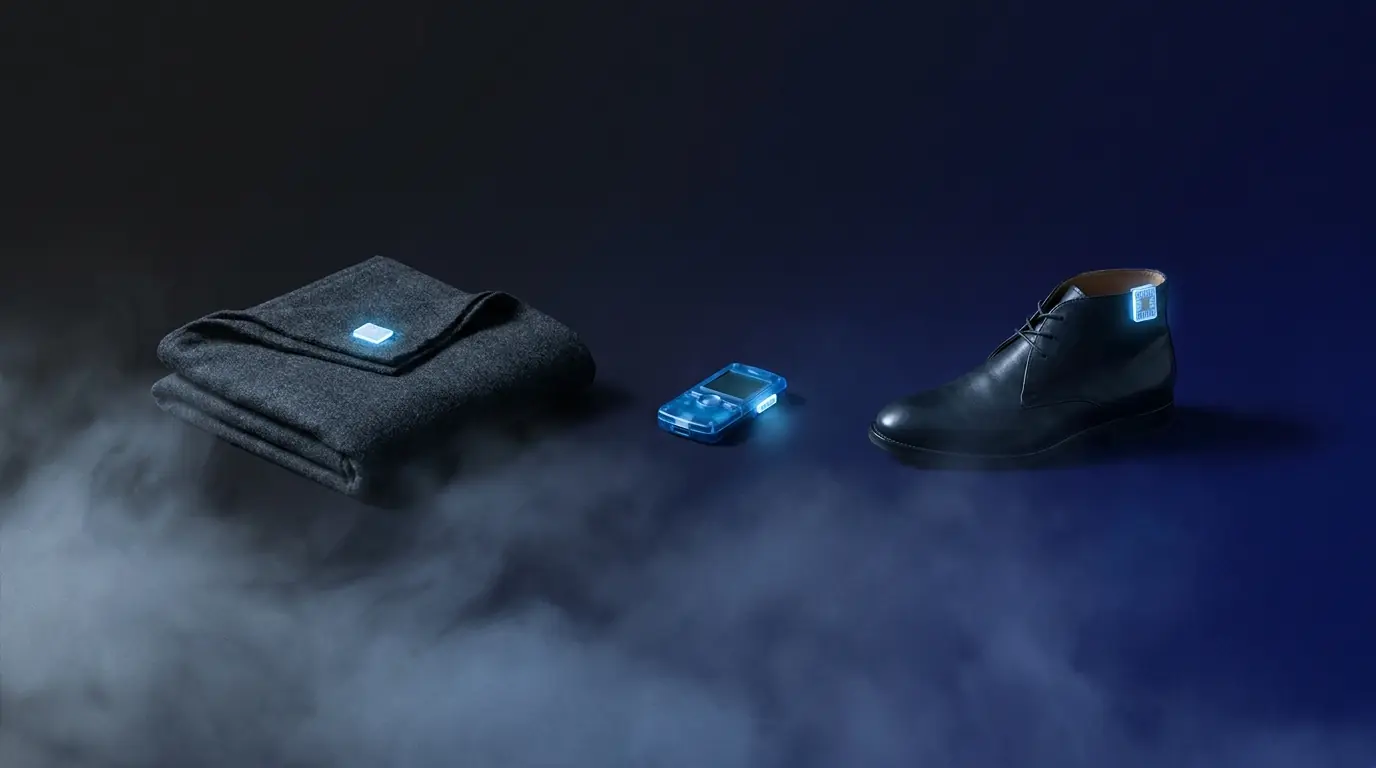
That product can carry a chip. With Aeroz, each unit gets its own NFC chip, and some editions add UHF so the same unit can be read at range in the warehouse (see chip capabilities). The buyer holds a phone to the product. There is no app to install. The phone opens a web address the brand controls, and the brand's page answers. How a tap works walks through each step.
No agent sits in that path. The tap runs from the product, to the phone, to the brand.
What one tap gives back
A tap is a small act. What it opens is the part of the relationship the agent took. Here is what a brand can put behind it.
Proof
The page confirms that this unit is genuine and not a counterfeit. That is the plainest reason to tap, and it is what makes the rest of the page worth trusting.
The passport
Materials, origin, care, repair and documents for the unit in hand. For EV, e-bike and industrial batteries sold in the EU, a digital passport is required from 18 February 2027 under Regulation (EU) 2023/1542 (see battery passports). The law names a QR code as the carrier, and a chip can open the same passport. So the record you build for the regulator can also work for the buyer.
The history
Where this unit has been, recorded as it moved. Anyone who taps can check it, at the level of detail the brand chooses to show. A buyer sees enough to trust the item. An inspector can see more.
Warranty
The buyer registers the item they are holding, not a receipt they have lost. The brand learns who owns which unit, with their consent.
Reorder
A refill, a spare part or a matching item, one tap from the product that needs it. That is the cross-sell the agent was not going to make.
Rewards
Points for a verified purchase, paid to a buyer who chose to join. Every one of these moments produces data the buyer gave you directly. That is first-party data. It does not pass through an agent or a platform on the way to you.
Why the reward needs a genuine unit
A reward printed on a label has a weak spot. A code that can be photographed can be shared, and a code that can be shared can be farmed. Post one code online and anyone can claim the points. Worse, every one of those claims lands in your data looking like a real customer.
The Aeroz chip answers each tap with a new one-time code. A code copied from a genuine tap has already been used, so it does not verify, and a copied label does not verify either. Our piece on NFC vs QR covers why a printed code cannot do this.
So each reward ties to a real unit in a real hand. Each scan in your data is a product, not a screenshot. The buyer can trust the reward, and the brand can trust the numbers.
What a tap does not do
A tap does not win the search. The agent still chooses, and the product still has to be the right pick on price, specs and reviews. A chip will not rescue a weak product.
It also asks something of the buyer. Someone has to pick up a phone and tap, and people tap when the tap pays off. Give them a reason on the pack: proof, a warranty, a refill, points. And the chip does not replace the QR code. It sits next to it and adds what a printed code cannot carry: evidence that this unit is the one the record describes.
Where to start
If agents take the search, plan for the moment they cannot reach. Pick one product line. Put a chip on each unit. Decide what the tap opens: proof, the passport, warranty, reorder, rewards. Then watch who taps and who comes back.
The agent will keep getting better at choosing. The brand's job is to make sure that, once the product arrives, it has something to say.