.png)
.jpg)
The contemporary commercial landscape of 2026 is defined by a fundamental paradox. While technological democratization has empowered global consumer reach, it has simultaneously fueled an unprecedented surge in sophisticated illicit trade. For organizations like Aeroz, maintaining brand equity is no longer a peripheral legal concern. It is a core strategic imperative that necessitates a total reconfiguration of how authenticity is communicated and rewarded.
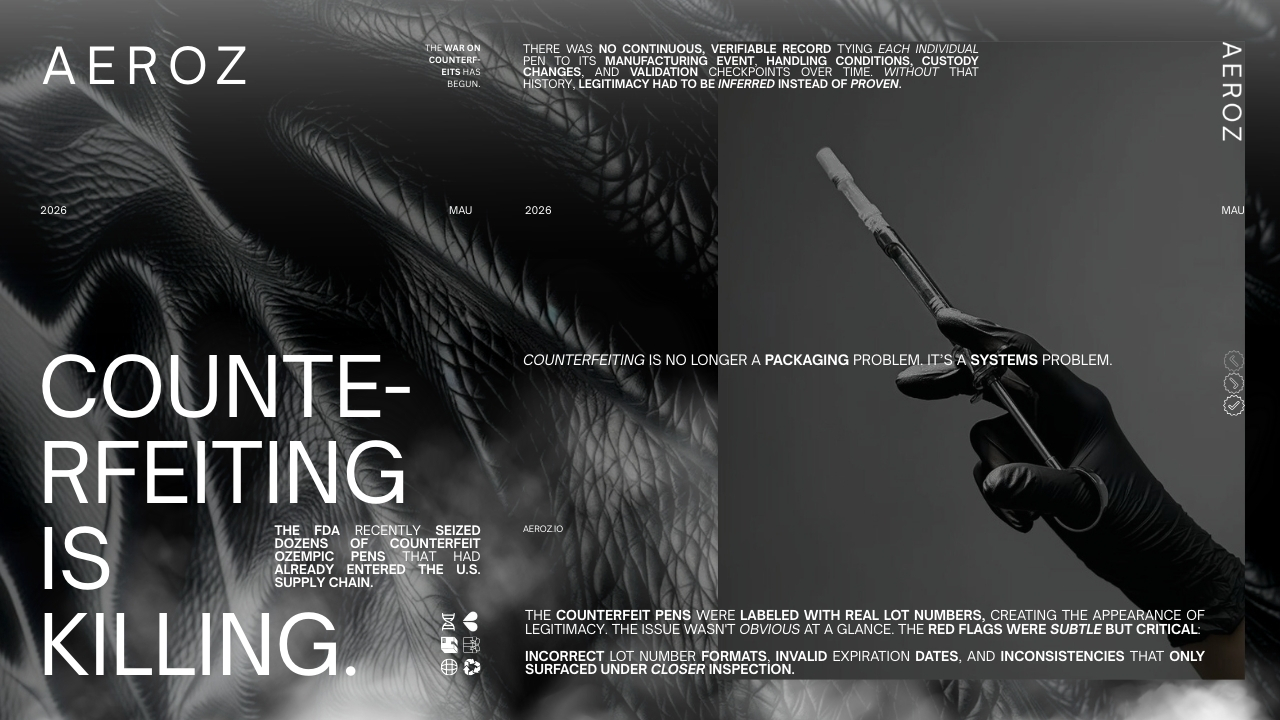
The global counterfeit goods market is on a trajectory to reach an estimated $1.79 trillion by the year 2030. This figure underscores a terrifying transition. Counterfeiting has evolved from a fragmented, back alley activity into a highly organized, multi billion dollar global industry.
The Rise of the Synthetic Market
This expansion is characterized by a move toward professionalized operations that leverage generative artificial intelligence. In 2026, the threat is “synthetic.” Criminal networks now use AI to clone brand aesthetics, automate fraudulent social media marketing, and create “superfakes” that are nearly indistinguishable from the original to the untrained eye. These operations leverage decentralized supply chains and complex social media manipulations to undermine the reputation and revenue of legitimate enterprises.
The synthetic market of 2026 is no longer about static copies but about dynamic mimicry. Counterfeiters are utilizing multimodal AI to generate high fidelity product catalogs and lifestyle imagery that never existed in physical form. These AI generated assets are so convincing that they bypass traditional reverse image search tools used by brand protection teams. Because each image is technically a unique creation of an algorithm, automated “scraping” bots often fail to recognize them as infringements of a brand’s copyrighted photography.
Furthermore, illicit networks have deployed Automated Listing Engines. These AI agents can spin up thousands of distinct web domains and social media storefronts in seconds. When a brand like Aeroz successfully takes down one fraudulent site, the network automatically migrates the entire storefront to a new “lookalike” domain. This speed asymmetry creates a perpetual race where human legal teams are consistently outpaced by machine scale distribution.
Moving Beyond Defensive Tactics
The challenge for brand leaders is that traditional protection methods are failing. In an era of professionalized illicit trade, a brand cannot simply “sue” its way to safety. The speed of the synthetic market outpaces the speed of the courtroom. Instead, brands must integrate authentication directly into the product experience.
By 2026, we are seeing the rise of Digital Product Passports. These utilize non fungible identifiers and encrypted physical markers to create a “birth certificate” for every item. This doesn’t just protect the brand; it empowers the consumer. When a customer can verify a product’s journey from the factory to their front door with a single scan, trust becomes a tangible asset.
The Engagement Loop
The most effective weapon against the $1.79 trillion threat is a loyal, informed community. Brands must shift from “policing” to “partnering” with their audience.
- Transparent Sourcing: Sharing the raw data of manufacturing to prove origin.
- Verification Incentives: Rewarding customers who use official authentication tools with exclusive content or loyalty points.
- Direct to Consumer Strength: Reducing the “blind spots” in the supply chain by owning the relationship from end to end.
A Strategic Imperative for the Future
The shift in the illicit landscape means that brand integrity is the new frontline of corporate strategy. As we move further into 2026, the organizations that survive will be those that treat authenticity as a feature, not a footnote. By embracing advanced technological safeguards and fostering a culture of transparency, brands can reclaim their sovereignty from the synthetic market.
The goal is simple but profound: making the cost of counterfeiting higher than the reward, while making the value of authenticity undeniable.
Related posts
.jpg)